25
2025
-
06
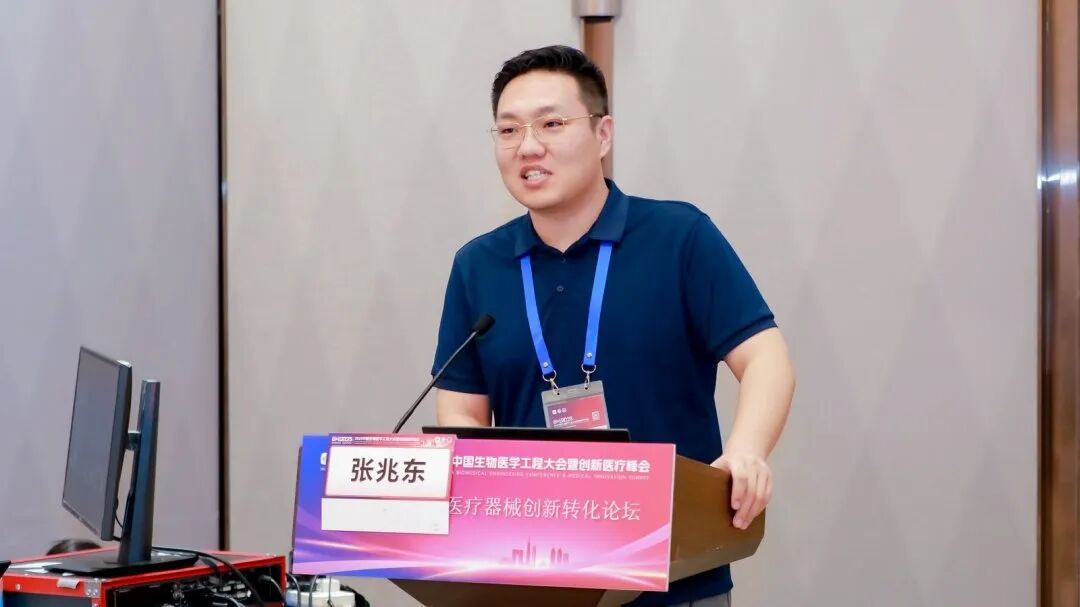
Zhang Zhaodong, Founder and CEO of Pangce Medical, attends the 2025 China Biomedical Engineering Conference.
Recently, the highly anticipated "Passive & Active Medical Device Innovation Translation Forum (BioMedCon) and the 2025 China Biomedical Engineering Conference" was held at the Suzhou Jinji Lake International Conference Center. On June 22, Mr. Zhang Zhaodong, Founder and CEO of Pangce Medical, was invited to attend the forum as a keynote speaker.
Recently, the highly anticipated "Passive & Active Medical Device Innovation Translation Forum (BioMedCon) and the 2025 China Biomedical Engineering Conference" was held at the Suzhou Jinji Lake International Conference Center. Mr. Zhang Zhaodong, Founder and CEO of Pangce Medical, was invited to attend the forum on June 22nd as a keynote speaker.
This forum was hosted by the Chinese Society of Biomedical Engineering and organized by the Shanghai National Research Institute for Medical Device Industry Development. It brought together numerous industry leaders, including representatives from the Yangtze River Delta Branch of the National Medical Products Administration's Medical Device Technical Review and Inspection Center, professors from universities both domestically and internationally, hospital experts, as well as senior executives from passive and active medical device companies—all aiming to build a platform for… "Deep Integration of Government, Academia, Clinical Practice, and Industry" A collaborative platform to jointly explore the path of innovative transformation for both non-active and active medical devices.

Mr. Zhang Zhaodong with "Applications of AI and Robotics in Hair Transplantation" A professional and in-depth sharing session was held on the topic, systematically showcasing Pangce Medical's innovative achievements and technological prowess in the hair care industry, thereby effectively advancing exchanges and development in the field of biomedical engineering.
Hairo Hair Transplant Robot
Technology Leads Globally, Reshaping the Hair Transplant Landscape
As the world's second and Asia's first smart hair transplantation robot to receive medical device registration approval and enter commercial operation, the Hairo hair transplant robot has leveraged product development collaborations with leading medical experts and resources from top-tier hospitals such as Huashan Hospital Affiliated to Fudan University in Shanghai and China-Japan Friendship Hospital in Beijing. Robotics core technology + eye-in-hand binocular vision + custom-made consumables for construction Core barrier.
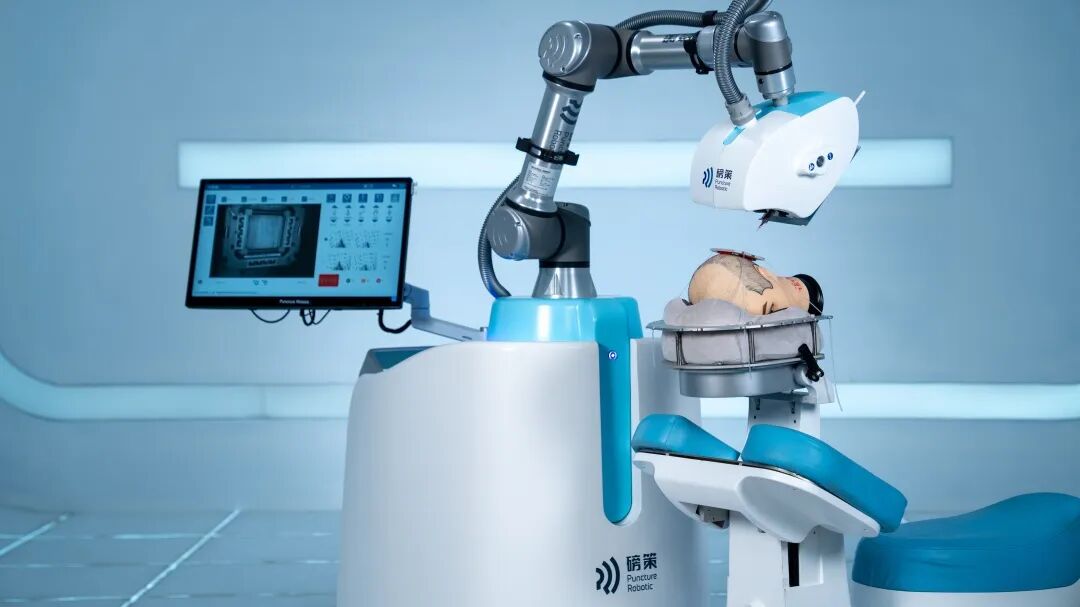
Building on traditional manual surgery, this robot can significantly reduce the rate of follicular damage and boasts several times greater efficiency compared to similar surgical robots used in the United States. The surgical wound has shrunk by 35%. Not only has it broken the U.S. monopoly on such products and technologies, but it also marks a significant breakthrough for our country in the field of high-end consumer medical equipment.
Since the product’s launch, its commercialization strategy has achieved a strategic leap forward—partnering not only with industry-leading institutions like Damai Microneedle Hair Restoration but also collaborating closely with top-tier domestic public medical facilities, including Peking University Shougang Hospital, Tongji Medical College Affiliated Union Hospital of Huazhong University of Science and Technology, Nanfang Hospital of Southern Medical University, and the First Affiliated Hospital of Chongqing Medical University, to jointly conduct cutting-edge clinical research. This approach has enabled simultaneous advancements in both technological innovation and market expansion.
Years of honing the sword to build technological barriers
Medical-engineering collaboration empowers industrial upgrades
Since launching medical robot R&D in 2019, Pongce Medical has already established “R&D-Clinical-Industrialization” Closed-loop system.
Core Team and Expert Resources: Led by Academician Sun Lining, Dean of the School of Mechanical and Electrical Engineering at Soochow University and Deputy Director of the State Key Laboratory of Robotics Technology and Systems at Harbin Institute of Technology, the project boasts top-tier advisory experts assembled from globally renowned resources. These include Professor Wu Wenyu, Director of the Department of Dermatology at Huashan Hospital Affiliated to Fudan University in Shanghai, who provides clinical guidance; Dr. Miguel Canales, Ph.D. from Harvard Medical School and Clinical Lead at Restoration Robotic; Professor Zhang Jufang, Director of Plastic Surgery at the First People's Hospital of Hangzhou, Affiliated to Westlake University; and Professor Yang Dingquan, Director of the Center for Hair Medicine at China-Japan Friendship Hospital, among other world-class specialists.

Industry-Academia-Research Collaborative Innovation: The "Artificial Intelligence Hair Innovation Center" has been established in collaboration with Harbin Institute of Technology's AI Research Institute, the Shanghai Center for Hair Medical Engineering Technology Research, and the Suzhou Collaborative Innovation Institute of Medical Robotics, among others. This initiative aims to build a cross-disciplinary platform for technology transfer, unlocking greater value for the advancement of intelligent hair solutions.
The product iteration roadmap is clear: First-generation hair transplant robot achieves implementation Domestic hair transplant equipment achieves a breakthrough from zero to one; The second-generation hair transplant robot integrates both graft harvesting and implantation functions; the third-generation robot introduces a globally pioneering hair follicle extraction technique that eliminates the need for shaving, while also reducing the device’s overall size. Through continuous, independent R&D and innovation, these advancements are systematically driving technological breakthroughs and enhancing clinical applications in the field of hair transplantation, positioning China’s hair medical industry to officially step into a new era. A new era of intelligent and precision medicine.
Smart technology is reshaping the industry ecosystem.
Full-cycle services meet diverse needs.
Mr. Zhang Zhaodong pointed out that the hair industry is currently witnessing two major development trends in the next decade:
Intelligent penetration accelerates: The emergence of hair transplant robots marks the arrival of the intelligent FUE 3.0 era, signaling advancements in hair restoration technology as well as the industry's move toward standardization and maturity. Their introduction has, to a certain extent, enabled more precise hair transplants while significantly reducing labor costs—and in the future, they could further drive the industry’s evolution toward greater intelligence and mechanization.
Diversified Model Upgrade: Driven by the demand for aesthetic appeal, hair transplant clinics have gradually entered a phase of resource integration, strengthening their efforts to "Hair Transplant + Hair Care + Hair Strengthening" Business Model Exploring opportunities to provide diversified services to a wider audience, we aim to integrate the entire hair industry value chain, potentially expanding consumers' latent needs even further.
It is worth noting that, in the medical device category selection of this forum, Pongce Medical's Hairo Hair Restoration Robot has stood out with its outstanding technical performance, innovative design concept, and significant clinical application value, earning it the first prize in the Medical Device category. This prestigious honor not only fully recognizes Pongce Medical's robust R&D capabilities in the field of hair transplant robots, but also highly acknowledges its significant contributions to advancing the innovation and commercialization of medical devices.

In the future, Pongce Medical will continue to uphold its vision—to make everyone happier through medical technology, becoming the most trusted and innovative healthcare enterprise—while strengthening collaboration and exchanges with governments, academia, clinical institutions, and industry players, ultimately delivering higher-quality, more efficient healthcare services to consumers.