30
2025
-
07
Awarded with an authoritative report from Xinhua News Agency! Hair transplantation has entered the "algorithm era," as HAIRO hair transplant robot tackles the 250-million-person hair loss dilemma with its exclusive AI-powered multi-embryo technology.
Thank you for the in-depth report by *Outlook Oriental Weekly*! As China's first Class III-certified AI-powered hair follicle extraction device, the Pangce HAIRO Hair Transplant Robot marks a pivotal shift in hair restoration—from being "reliant on manual expertise" to embracing "human-machine collaboration as a dual driving force," perfectly aligning with our vision. We look forward to working hand-in-hand with all industry partners to leverage innovation and drive greater precision, standardization, and transparency in hair transplant services.
Editor's Note:
Thank you to *Outlook Oriental Weekly* for your insightful report! As China's first Class III-certified AI-powered hair follicle extraction device, the Pangce HAIRO Hair Transplant Robot marks a pivotal shift in hair restoration—from being "reliant on manual expertise" to embracing "human-machine collaboration as a dual driving force," which aligns perfectly with our vision. We look forward to working hand-in-hand with all industry partners, leveraging innovation to advance precision, standardization, and transparency in hair transplant services.
The following article is sourced from Outlook Oriental Weekly, authored by Wan Honglei.
This article was published in *Outlook Oriental Weekly* (Issue 15, 2025, Total Issue 938), originally titled "Robots Perform Hair Transplants with 'Magic Hands'."
Text by Wan Honglei, reporter for *Liaowang Dongfang Weekly*, edited by Gu Jiajun
"Although domestically produced surgical robots have achieved remarkable breakthroughs in traditional medical fields such as orthopedics and vascular surgery, there remains a significant gap in the consumer healthcare sector, particularly in rapidly growing niche areas like hair transplantation."
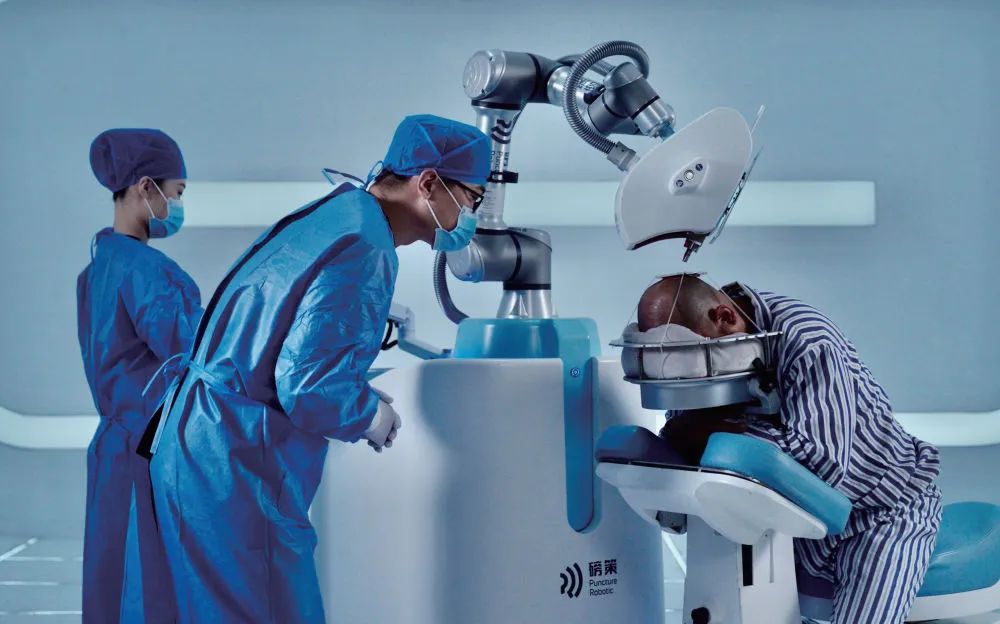
Pangce Medical's hair transplant robot is at work.
In mid-May 2025, under live public broadcast cameras, a domestically produced hair transplantation robot named HAIRO successfully assisted Dr. Zhexiang Fan’s team at the Southern Medical University Southern Hospital in performing a hair transplant surgery.
“The robot’s high-definition camera can detect every single hair in the area, automatically identifying whether it’s a single, double, or triple strand. During the follicle extraction process, we can precisely calculate the angle at which the needle is inserted. Plus, we keep an accurate record of whether each hair was extracted without any unwanted movement,” Chen Yuxin, Vice President of Marketing at Puncture Robotic (Shanghai) Intelligent Medical Technology Co., Ltd. (hereafter referred to as “Punce Robotic Medical”), told *Outlook Oriental Weekly*.
Affected by multiple factors, hair loss is becoming increasingly common and is trending toward younger ages. Nowadays, when you search for "hair transplantation" on your phone, you’ll find not only traditional treatment options but also "AI robot-assisted hair transplantation."
"一系列植发 robotics advancements have significantly reduced the surgery's reliance on a doctor's experience, while enhancing both surgical efficiency and precision. It’s safe to say that robots have propelled the hair restoration industry to a new level of innovation, with greater intelligence, accuracy, standardization, and regulatory compliance," Li Shuhua, Director of the Academic Exchange Department at the Chinese Association of Plastic and Cosmetic Surgery’s Integrated Traditional Chinese and Western Medicine Branch, and founder of Meifu Medical, told *Outlook Oriental Weekly*.
“Although domestically produced surgical robots have achieved remarkable breakthroughs in traditional medical fields such as orthopedics and vascular surgery, there remains a significant gap in the consumer healthcare sector—particularly in rapidly growing niche areas like hair transplantation,” said Chen Yuxin. “Given the current momentum of development, we can expect more innovative players to enter the competition in the surgical robot submarket in the next phase.”
"Golden Track"
In recent years, robotics-related technologies have continued to advance, and the healthcare industry has seen a growing demand for cutting-edge innovations. As a result, surgical robots have emerged as a "golden track" highly favored by investors.

In recent years, robotics-related technologies have continued to advance, while the healthcare industry has seen a growing demand for cutting-edge innovations. Multiple factors have positioned surgical robots as a "golden track" highly favored by investors.
From the perspective of surgical robot technology pathways, surgical robots are broadly categorized into master-slave type and positioning type. Master-slave surgical robots perform operations under the remote control of surgeons; among these, robots like the internationally renowned "da Vinci" system have already been widely applied in thoracic and abdominal surgeries. Meanwhile, positioning-type surgical robots—designed to provide surgeons with precise localization and navigation tools—are increasingly used in minimally invasive diagnostic and therapeutic procedures involving thoracic, abdominal, and pelvic cavity punctures, as well as in orthopedic and neurosurgical operations.
"Master-slave surgical robots designed for trans-cavity procedures hold vast untapped potential in clinical applications such as biopsies, drainage, and tumor ablation across various organ tissues. Today, numerous industry giants—both domestically and internationally—have already begun making strategic investments, leading to several successful implementations in diverse application scenarios," said Chen Yuxin. "Given this dynamic market landscape, we decided to focus on puncture-guided surgical robots when choosing our product direction. This is also the origin of the company's Chinese and English names—Pang Ce (Puncture)—reflecting our dedicated commitment to 'puncture'-based diagnostic and therapeutic solutions."
Zhang Zhaodong, founder of Pangce Medical, and his team bring 10 years of experience in robotic technology R&D and product line development management. "We've accumulated extensive expertise in multi-modal sensing and control—such as visual and force perception—as well as in robotics design and manufacturing," Zhang Zhaodong said. "Over a decade ago, most post-blood-collection laboratory tasks had already been streamlined through automated equipment. Yet at that time, blood collection itself remained the one area that hadn't been fully automated—despite being an extremely high-frequency service demand. That's precisely why our team initially focused our efforts on developing a robotic solution for blood collection."
Pangce Medical’s vision is to create a fleet of blood-drawing robots—referred to as “nurses”—and place them on every hospital floor, ready to serve both medical facilities and patients. Initially, the company invested 5 to 6 million yuan in developing these robotic nurses. Although the technology has achieved significant breakthroughs, market feedback has been less than satisfactory, primarily because both patients and hospitals have shown lower-than-expected psychological acceptance of robot-assisted blood collection.
"From the blood-drawing robot project, we've learned that for medical robots to truly make a difference, it's not enough to simply tackle technical challenges—it also requires careful consideration of socio-psychological factors," said Chen Yuxin.
In 2021, data from the National Health Commission caught Zhang Zhaodong's attention. According to statistics at the time, China has a massive population experiencing hair loss—exceeding 250 million—and among them, androgenetic alopecia is particularly prevalent. What’s more, the group facing hair loss is trending younger.
"According to market research, hair transplantation—a medical aesthetic procedure designed to enhance one’s appearance—comes with a certain level of consumer affordability barrier. Taking the price per individual hair follicle and the number of follicles implanted as variables, the cost of hair transplantation typically ranges from several thousand to tens of thousands of yuan. We’ve also observed that standardized protocols for hair transplant surgery have yet to be fully established. A newly trained hair transplant surgeon usually requires 3 to 7 years of rigorous learning and development, and the high costs associated with physician training further contribute to the relatively high pricing of these procedures." Li Shuhua noted, "As modern individuals place increasing importance on their appearance, the penetration rate of the hair transplant market will continue to rise, driving sustained growth in market size—providing an excellent opportunity for the application of hair transplant robots."
Technological accumulation and market gaps have provided Pongce Medical with an excellent entry point—a small yet elegant niche track. In 2021, Pongce Medical initiated research and development of a hair transplant robot, focusing on the comprehensive process of hair detection, diagnosis, treatment, and nourishment/fortification (which involves using specialized equipment to deliver targeted nutritional care to hair follicles, thereby inhibiting follicle degeneration and atrophy).
“In the field of traditional surgical robots, nearly every product targets a market worth hundreds of billions—so we’re still maintaining certain business lines in the conventional healthcare sector. However, consumer-oriented medical services are the area we’re currently focusing on deeply,” said Chen Yuxin. “Hair transplant surgery not only demands exceptionally high precision but also requires consistent stability in repetitive procedures—features that perfectly align with the technological strengths of our newly developed puncture robot.”
"Run as soon as you land"
From a global perspective, hair transplantation technology has evolved from rudimentary techniques to highly refined methods: In the 1950s, flap transplantation was the dominant approach, but it often resulted in unnatural-looking results and significant scarring. By the 1990s, Follicular Unit Transplantation (FUT) significantly improved the natural appearance of transplanted hair, though it left noticeable scars at the donor site. In the early 21st century, Follicular Unit Extraction (FUE) emerged as the industry standard, effectively eliminating linear scarring and offering a more natural outcome. However, FUE outcomes still heavily depend on the surgeon’s expertise, and its efficiency remains somewhat limited. Meanwhile, the upstream segment of the hair transplant industry boasts a diverse array of products, including follicle detectors, diamond blades, implantation needles, and implantation pens—each with unique features. Yet, all these tools ultimately require manual extraction and transplantation of hair follicles by the physician.
Hair transplantation is not only a delicate procedure but also physically demanding—typically, a single session can take anywhere from 4 to 6 hours, following the steps of follicle extraction, separation, and implantation. The most time-consuming parts are extracting and implanting the follicles, as the surgeon meticulously works one by one by hand, ensuring both the integrity of the follicles and the success rate of the transplant.
"Around 2021, the technology related to automated hair transplantation devices was largely monopolized by foreign companies. 'These foreign products can extract 800 follicles per hour and create drill holes measuring 1.2 to 1.5 millimeters in diameter,' explained Li Shuhua. 'However, we believe these tools aren’t particularly patient-friendly—resulting in larger incisions, longer healing times, and, in some cases, leaving behind a small white spot after recovery. In other areas, patients even experience frequent inflammation.'"
“At the very beginning of launching the hair transplant robot project, we tried using pigskin to simulate the scalp environment—but soon realized that pigskin simply couldn’t fully replicate the true conditions of a human scalp, whether in terms of texture, firmness, or even aging characteristics,” Chen Yuxin recalled.
Due to the lack of reference data, the team decided to gather first-hand information through live trials. "Company founder Zhang Zhaodong was the first tester, and soon after, nearly every male colleague joined in," said Chen Yuxin. "Every time the machine punctures the scalp, the parameter settings must be readjusted—everything from the angle and depth to the acceleration of needle insertion and withdrawal, as well as the design of the needle tip. We’re constantly refining and improving each and every detail. Our goal is for the hair-implanting robot to hit the market ready to perform flawlessly, delivering an ideal experience to patients."
"Hand-eye integration" is one of the key challenges in developing hair transplant robots—specifically, ensuring that the camera moves in sync with the robot's motion axes. This represents cutting-edge technology at the intersection of robotics and visual AI. Another major challenge lies in enhancing both the efficiency and precision of follicle extraction. Currently, when surgeons manually extract follicles, the transverse breakage rate stands at around 15%. In hair transplantation procedures, the more precise the follicle extraction process, the lower the damage rate—and ultimately, the better the final outcome.
“Initially, the hair transplant robot could extract only 200 follicles per hour—far lower than the more than 2,000 follicles processed manually each hour. To narrow this gap, the team thoroughly optimized the robotic arm’s movement trajectory: shifting from straight paths to zigzag routes, refining the sequence of follicle extraction, and fine-tuning the interval distance for each precise stitch—all through repeated testing and adjustments,” said Chen Yuxin. “Now, our hair transplant robot has achieved an impressive efficiency of 1,800 to 2,000 stitches per hour, which represents the current technological limit and also makes it the most efficient hair transplant robot on the market today.”
On March 1, 2025, Pongce Medical officially launched its first-generation hair transplant robot—HAIRO Hair Follicle Extraction Device—developed entirely in-house. HAIRO is also China’s first AI-powered hair transplant robot to receive Class III certification from the National Medical Products Administration (NMPA).
For patients experiencing hair loss, hair follicles are incredibly valuable. If the transection rate of follicle extraction decreases by 10%, extracting 3,000 follicles will allow doctors to obtain an additional 300 healthy, viable follicles.
"A patient was experiencing severe hair loss on both sides of the hairline, with thinning at the crown, reaching a脱发 level of 4 to 5. Upon examination, we found that the density and texture of the hair in the donor area at the back of the head were still quite good. Given the relatively large area of hair loss, we decided to use robotic hair transplantation. The robot precisely harvested follicles evenly from the donor region at the back of the head, and ultimately transplanted 4,300 follicular units into the affected areas. Post-surgery, combined with various advanced care techniques, the patient is extremely satisfied with the results," explained a doctor from a hospital in Chongqing.
"During our practical application, patients reported almost no pain or discomfort during the hair transplant robot surgery. The treatment experience has far exceeded expectations, and postoperative recovery has been remarkably swift—typically, follicular healing occurs within about 5 days, with the extraction site fully restoring to its original condition," a industry insider told *Outlook Oriental Weekly*. "Follow-up studies show that, after robotic hair transplantation, the follicle survival rate remains exceptionally high."
"By combining a super-clear binocular camera with advanced algorithms, we’ve achieved precise follicle identification and highly accurate extraction, significantly reducing the follicle transection rate to below 10% while improving follicle integrity by more than 40%. Although the current speed of our hair transplant robot hasn’t yet fully surpassed that of experienced surgeons, ongoing technological optimization and iteration will enable the robot to eventually outperform human doctors altogether in the near future," said Chen Yuxin.
The Age of Algorithms
“The hair transplant robot just launched, and we already have more than 20 orders in hand,” said Chen Yuxin. “Since March until now, market feedback has been exceptionally positive—feedback like this is actually quite rare for embodied AI robot products.”
“Nowadays, hair-transplant robots have already entered the stage of large-scale implementation in several private hospitals. Meanwhile, a few public hospitals are currently undergoing the bidding process. Although this will take some time, these hospitals have expressed strong confidence in our product,” said Chen Yuxin.
Private institutions are the main force in the hair transplant market, accounting for about 86% of the market share. However, these private clinics generally face challenges such as a scarcity of high-quality doctors, insufficient standardization, severe homogeneity, and high marketing costs. Public hospitals, on the other hand, enjoy greater patient trust—but hair transplant procedures aren’t considered key projects within their medical beauty departments. As a result, they also grapple with issues like incomplete discipline development and an inadequate number of specialized doctors.
“The hair transplant robot can help alleviate the shortage of doctors, a problem that exists in both public hospitals and private clinics. Traditional hair transplant procedures typically require multiple medical staff to perform repetitive tasks like follicle extraction, whereas the robot significantly reduces the physical and visual strain on surgeons while boosting surgical efficiency. At the same time, its standardized workflow minimizes reliance on individual experience—thanks to its built-in AI algorithms and consistent operating protocols, even novice surgeons can quickly improve their skills with just a short period of training.” Li Shuhua noted, “With just three to four procedures under their belt, surgeons can become proficient in using the hair transplant robot, though they may not instantly become masters, they’ll certainly reach the technical level of mid-level or higher-ranking physicians. For private clinics, delivering high-quality results naturally attracts more patients, strengthens their reputation, and enhances brand competitiveness. Meanwhile, for public hospitals, the hair restoration and cosmetic surgery program is poised to become a new revenue driver, helping boost overall hospital income.”
“Typically, when a consumer decides to undergo hair transplantation, they’ll visit multiple hair restoration clinics for comparison. The price and the complexity of the procedure depend on the number of follicles implanted—yet for the same patient, some clinics may quote 3,000 grafts, while others offer 1,500. This reliance on experience-driven manual estimations lacks precision, and pricing isn’t always transparent,” said Li Shuhua.
"Dr. Li Ming, Chairman of Zhongzhi Medical Technology Group, stated, 'The hair transplant surgery robot has redefined the fundamental principles of traditional hair transplant procedures, providing hair transplant institutions with a clear path toward intelligent and standardized upgrades. At the same time, data standardization and traceability are making the hair transplant industry more transparent.' Zhongzhi Medical Technology Group is currently collaborating with Pangce to jointly develop an all-encompassing 'AI + Hair Transplant' solution, and has already purchased several HAIRO hair transplant robots.'"
In March 2025, Pangce Medical released the industry’s first White Paper on the Construction of a Standardized System for Hair Transplantation Robots, simultaneously launching the "Hair Transplant Surgeon Training Program." Standing at a new pivotal moment where "precision medicine" and "inclusive healthcare" are deeply converging, "we aim to address industry乱象 (disorder) through data-driven, standardized surgical process design, leveraging technological innovation to propel the sector toward high-quality growth," said Chen Yuxin. "Technological advancements often spark transformative changes across industries. By establishing industry standards and rolling out comprehensive training programs, we aspire to shift from isolated breakthroughs to ecosystem leadership, ultimately transitioning from mere equipment suppliers to key architects of the broader industry ecosystem."
"Currently, domestic hair transplantation technology has entered the era of algorithms, and in the future, it may be further optimized through design improvements, ultimately leading to a comprehensive, standardized, and intelligent treatment plan covering the entire process. I suggest that clinicians should explore expanding the application scenarios of hair-transplantation robots, delving deeper into the potential of using robotics to treat hair-related conditions," said an industry expert from a top-tier hospital.
"‘I believe that hair-transplant robots will become the core intelligent assistant in specialized hair clinics of the future, helping more people achieve luscious locks—and ultimately enhancing their appearance, boosting their mood, and improving their overall quality of life,’ said Li Shuhua."
(The author is the Director of the "AI+" Studio at Outlook Oriental Weekly.)