13
2025
-
01
National First Certificate! Puncture Robotic HAIRO Hair Transplant Robot Approved, Creating a New Paradigm for Standardized, Precise, and Intelligent Hair Transplant Surgery.
Recently, Puncture Robotic (Shanghai) Intelligent Medical Technology Co., Ltd. (hereinafter referred to as "Puncture Robotic") obtained the NMPA Class III medical device registration certificate (National Medical Device Registration Certificate: 20253010078) from the National Medical Products Administration (NMPA) for its first-generation HAIRO® hair follicle extraction device (also known as: hair transplantation robot), which has completely independent intellectual property rights.
Recently, Puncture Robotic (Shanghai) Intelligent Medical Technology Co., Ltd. (hereinafter referred to as "Puncture Robotic") obtained the NMPA Class III medical device registration certificate (National Medical Device Registration Certificate: 20253010078) from the National Medical Products Administration (NMPA) for its first-generation HAIRO® hair follicle extraction device (also known as: hair transplantation robot), which has completely independent intellectual property rights.
The hair transplantation robot is a hair transplantation medical auxiliary system that combines robotic technology, 3D imaging technology, and AI artificial intelligence technology. It uses a computer-controlled robotic arm to perform hair transplantation surgery, capable of precisely extracting and implanting hair follicles, thus assisting doctors in completing various hair transplantation surgeries better and faster. For a long time, this technological high ground has been occupied by American companies. Now, the advent of Puncture Robotic's HAIRO® hair transplantation robot has broken this monopoly, becoming only the second in the world, the first in Asia, and the first in China to be approved for this type of robot.
The HAIRO® hair transplantation robot is specially designed for the hair characteristics of Asians. It uses three-dimensional visual positioning technology to accurately identify hair and uses algorithms to plan and control the robotic arm to complete hair follicle extraction surgery. It has significant advantages in improving the extraction rate of multi-embryonic hair follicles, thus reducing the number of traumatic wounds, maintaining the integrity of hair follicle puncture, accelerating treatment efficiency, and enhancing the patient experience. The approval of the HAIRO® hair transplantation robot not only provides hair transplantation services with precise controllability, high treatment consistency, and good post-transplantation effects for patients with hair loss, but also marks a new stage in the intelligent, precise, standardized, and standardized construction of hair transplantation in China.
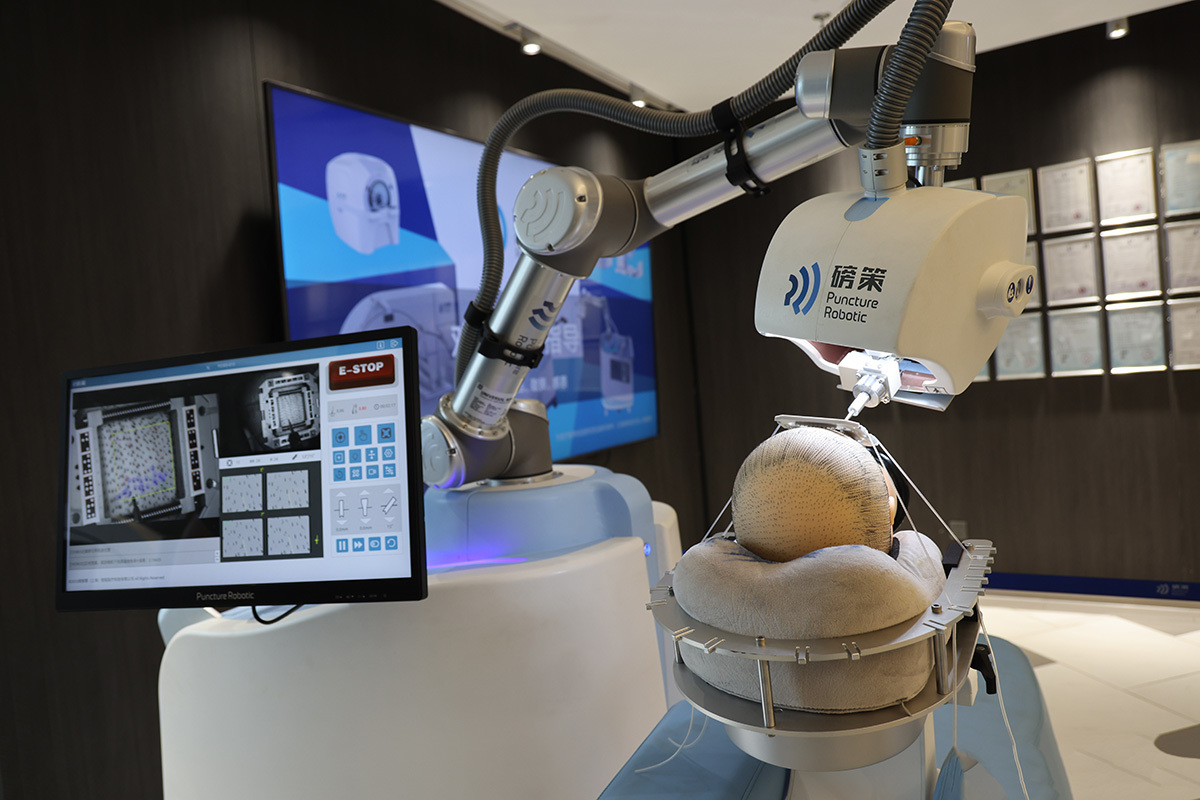
HAIRO® hair transplantation robot
Competition among hair transplantation institutions is becoming increasingly fierce,
Insufficient construction of hair science departments in public hospitals, robots may be the key to breaking the deadlock
Hair loss is the "sword of Damocles" hanging over the heads of every beauty-loving person. According to statistics from the National Health Commission, there are more than 250 million people with hair loss in China, and the trend of younger people is obvious, especially among men around 30 years old. Currently, the main treatments for hair loss include regulating physical condition, physical therapy, drug therapy, and hair transplantation surgery. Among them, hair transplantation surgery is favored by people with hair loss because it can directly cause hair to grow in the hair loss area and the effect is significant. Even a wealthy person like Musk chooses hair transplantation to solve "the big problem on his head".
FUE (follicular unit extraction) is the current mainstream hair transplantation method. This method requires manual extraction of hair follicles, and it requires high experience and precision of operation from the doctor. The surgery, which often takes 4 to 8 hours of intense concentration, is a double test of the doctor's eyesight and physical strength. Although there are more efficient foreign hair transplantation robots on the market, the price of 4 to 8 million yuan and the high treatment costs are a heavy burden for many hair transplantation institutions and hair loss sufferers.
Looking at the entire domestic hair transplantation market, since the listing of the "first hair transplantation stock" in 2021, the hair transplantation market has experienced rapid development, and competition has become increasingly fierce. Faced with the dual challenges of low repurchase rate and high customer acquisition cost, hair transplantation institutions have to invest huge marketing expenses, which in turn drags down revenue and gross profit margin. Coupled with the trend of consumption downgrading, how to find new breakthroughs and "marketing selling points" in terms of technology, service, and price has become a new topic for hair transplantation institutions.
Although public hospitals are more trusted by patients, hair transplantation is not a key project for hospitals, and they pay insufficient attention to hair diseases and the construction of their disciplines is not perfect. Some hospital hair clinics are only branches of dermatology, lacking an independent system, and their diagnosis and treatment research is limited. At the same time, the number of hair specialists in China is insufficient, mainly concentrated in tertiary hospitals in first-tier cities. Hair transplantation surgery is time-consuming and requires the cooperation of multiple people. Public hospitals have heavy reception tasks, limited time and manpower, and the waiting time for hair transplantation is generally several months, making it difficult to carry out on a large scale.
Hair transplantation seems simple and repetitive, but it requires doctors to form muscle memory through a large amount of repetitive standard movement training in order to master high-quality surgical skills. This kind of precise and repetitive operation is exactly the specialty of robots.
Accurate observation, good results, high multi-embryonic hair follicle extraction rate, low transverse section rate, efficient and denser hair transplantation
The hair transplantation robot project of Puncture Robotic was completed with the support of Academician Sun Lining's team and Professor Wu Wenyu's team, director of the Department of Dermatology at Huashan Hospital affiliated to Fudan University.
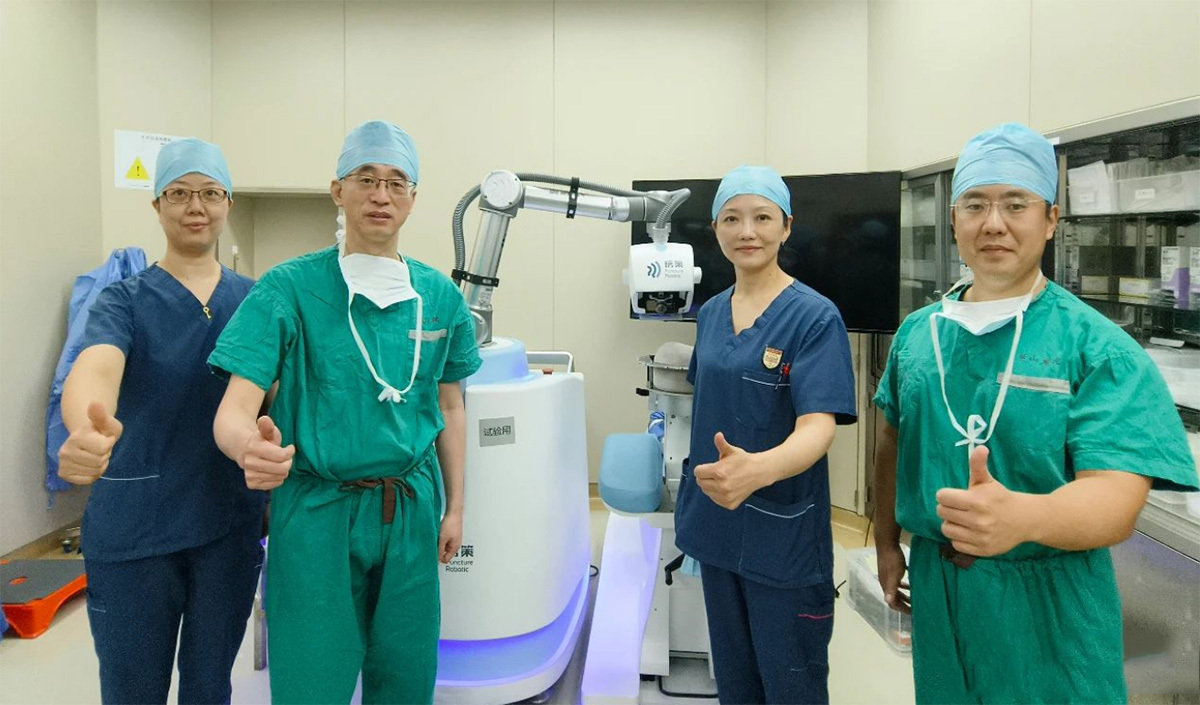
A group photo of the clinical team (part) of Huashan Hospital affiliated to Fudan University after using the Puncture Robotic robot. Professor Wu Wenyu is the second from the left in the picture.
As the first domestically produced hair transplantation robot to obtain NMPA certification, data shows that the HAIRO® hair transplantation robot's automatic hair follicle extraction speed is over 1700 FU/h, the single hair follicle extraction time is less than 2 seconds, the extraction accuracy is about 95%, the hair extraction precision is 0.01 mm, and the depth precision is 0.05 mm. Its 0.8 mm-1.0 mm needle type and single/double needle compatible system can efficiently separate various types of hair follicles, reduce trauma to the hair donor and recipient areas, achieve a hidden scar effect, and effectively shorten the patient's recovery period.
Hair follicle extraction is one of the key links to the success or failure of hair transplantation, and it directly affects the naturalness and density of the hair transplantation effect. A human hair follicle unit generally contains 1 to 4 hairs. A hair follicle unit with more than two hairs is called a multi-embryonic hair follicle. The higher the multi-embryonic ratio, the more hair follicle units can be obtained under the same amount of hair follicle units, and the better the planting effect, which means it looks denser.
Puncture Robotic has introduced "Ultra-clear dual-camera + AI algorithm" , which can quickly identify the density, growth direction, single embryo and multi-embryo distribution of hair follicles, and at the same time, intelligently plan the extraction path in real time to help doctors target and extract hair follicles, improve the proportion of multi-embryonic hair follicle extraction, and provide more hair follicle units for transplantation for patients with the same number of punctures, protecting every hair follicle of patients with hair loss. At the same time, based on Unique hand-eye integrated intelligent operating system and AI-assisted visual recognition technology , not only reduces the hair follicle extraction transverse section rate by 40%, but also supports real-time planning and intelligent dynamic optimization of extraction work during the operation, helping doctors to perform the operation quickly, accurately, and steadily.
The excellent performance of the HAIRO® hair transplantation robot benefits from its continuous innovation and breakthroughs in several important core components. Taking the tensioner as an example, this is a key component of the hair transplantation robot, responsible for maintaining scalp tension and creating a flat scalp working surface. Puncture Robotic has made comprehensive optimizations from tension to large-area labels. It has a high-precision adjustment function, which ensures that the tension of the hair follicles during the extraction process is moderate, and provides precise guidance for the robotic arm, making hair follicle extraction more precise, reducing hair follicle damage, improving surgical efficiency, reducing blood seepage, and accelerating the post-operative recovery period.
For example, the puncture needle. Puncture Robotic uses 0.8mm-1.0mm needles, which are more suitable for extracting the round hair follicles of Asians. Its unique multi-stage, multi-mode hybrid puncture allows for precise control of the angle and depth of follicle extraction, simulating the natural direction of hair growth and enabling uniform extraction. At the same time, the fine needle design reduces trauma to the patient's hair donor and recipient areas, minimizing postoperative pain and discomfort, and promoting faster recovery. In addition, combined with its unique high-breakthrough real-time sensing motion control technology, it provides double insurance with puncture force protection and motion safety protection, making the surgery safer and more reliable.
In addition, Puncture Robotic has also adjusted the light source, using infrared vision technology to ensure clear imaging while reducing eye strain for doctors. At the same time, this technology allows blood to penetrate, enabling better hair identification and improving the safety and accuracy of the surgery.
Professor Wu Wenyu of Huashan Hospital Affiliated to Fudan University once commented on the HAIRO® hair transplant robot, stating that domestic hair transplant robots are comparable to foreign robots in terms of speed and accuracy, and have certain advantages over manual extraction success rates. This will effectively address the clinical shortage of hair transplant professionals, promote the development of China's hair transplant field, and bring new hope to the hair transplant industry. [1]

Professor Wu Wenyu using the HAIRO® hair transplant robot
Promoting standardized hair transplantation concepts and supporting the healthy development of the hair transplant market
Standardization is a prerequisite for the healthy development of the industry, and hair transplantation is no exception.
On the one hand, hair transplant robots can help stabilize prices in the hair transplant industry, serving as a price benchmark and quality reference standard. Specifically, the current charges for hair transplant surgery are generally based on the number of hair follicles and the doctor's experience, lacking a unified standard. Many private hair transplant institutions are engaged in a price "tug-of-war" to compete for consumers, even leading to the displacement of good by bad.
The application and popularization of hair transplant robots can help correct irregularities in the hair transplant industry and improve the overall industry level. It can stabilize market prices and avoid the vicious cycle of low-price competition. Moreover, hair transplant robots can ensure surgical quality, reduce post-hair transplant complaints, and are expected to serve as a price benchmark and quality effect reference for the hair transplant industry.
For public hospitals, under the background of "tightening their belts" and being self-sufficient, hair transplant surgery is expected to bring new revenue growth points and help public hospitals better build hair departments.
On the other hand, hair transplant robots provide a standardized and easily replicable and promoted solution, laying a solid foundation for the standardization process of the hair transplantation industry and its clinical and scientific research development. The development of hair science depends on equipment development and research breakthroughs. Hair transplant robots provide a standardized process and operation, helping to improve the overall diagnostic accuracy and service level of hair departments, allowing medical personnel to devote more energy to pre-operative assessment, post-operative care guidance, and other aspects, improving department efficiency and discipline level.
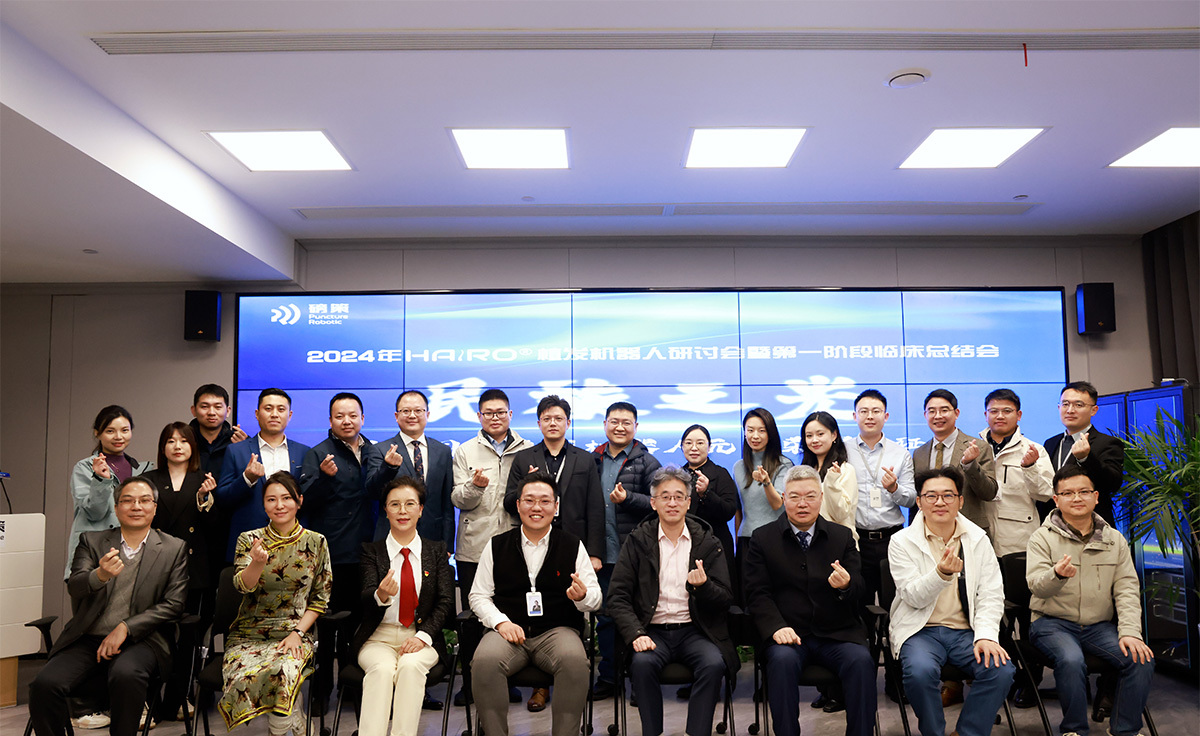
Domestic hair field experts participate in the Puncture Robotic HAIRO® hair transplant robot clinical trial summary
It is particularly noteworthy that Peking University Shougang Hospital pioneered the establishment of a new department focusing on comprehensive hair treatment in 2024, breaking the domestic status quo of "no separate hair departments in public tertiary hospitals." Among the advanced equipment introduced to this department is Puncture Robotic's HAIRO® hair transplant robot. At the same time, the Peking University Shougang Hospital Hair Treatment Department has officially become the clinical research unit and clinical application training base for the HAIRO® hair transplant robot (Beijing). This cooperation has greatly promoted the collaborative development of the hair treatment department in medical treatment, teaching, and research.
Professor Wang Jiping of Peking University Shougang Hospital said: "In the future, hair transplant surgery will be more intelligent. The popularization of robotic hair transplantation in the future will not only free doctors from heavy surgery, but also provide hair loss patients with a safer, more convenient, and more precise treatment method." [2]
Driven by both domestic and international markets, creating a full-cycle solution for hair treatment
Hair loss has become a global problem. Based on this, Puncture Robotic has formulated a strategy of driving both domestic and international markets. The company has received dozens of intended orders in China, with cooperative customers covering comprehensive hospitals and private medical service institutions; at the same time, the HAIRO® hair transplant robot is also undergoing overseas registration, preparing to enter the Southeast Asian and European markets.

In terms of commercialization strategy, Puncture Robotic takes hair transplant robot research and development as its core, and builds a full-process solution around the overall process of hair detection, diagnosis, treatment, and maintenance. In addition to the first-generation hair transplant robot HAIRO® approved this time, the company has also developed the second-generation hair transplant robot Normanrobo™, the third-generation hair transplant robot HAIRO L™, the HairTracker 3S intelligent hair grading identification instrument, and scalp anti-aging treatment instruments, providing comprehensive hair treatment solutions for hospitals and hair transplant institutions.
With the approval and listing of the HAIRO® hair transplant robot, Puncture Robotic will continue to advance into the hair transplant market, cooperate with more private hair transplant institutions and public hospitals, and help more patients overcome the troubles of hair loss, regain their confidence and beauty.
References:
[1] "New Era Begins, Leading the Way | HAIRO® Hair Transplant Robot Showcases the Glory of National Research, Domestic First Clinical Study Successfully Concludes"
[2] "HAIRO Hair Transplant Robot Clinical Research Unit Lands in Beijing, Leading the Hair Industry Development in the Beijing-Tianjin-Hebei Region"
[3] "Creating a Full-Cycle Solution for Hair Loss Treatment, Hair Transplant Robot Developer "Puncture Robotic" Receives Tens of Millions of Yuan in Pre-B+ Round Financing"
*This article cannot be reproduced without authorization from Arterial Network.*