13
2025
-
01
Asia's first, the nation's first certificate! Puncture Robotic HAIRO hair transplant robot approved for market launch, cutting-edge technology drives the transformation of the hair transplant industry development model! Service upgrade!
As another significant breakthrough in domestic medical devices, will this hair transplant robot truly change the rules of the game after its launch? How to strike a balance between high-tech R&D and consumer medical needs? With these questions, MedRobot interviewed Zhang Zhaodong, CEO of Puncture Robotic, to explore the story behind the hair transplant robot and the future development direction of the industry.
In an era where hair loss is increasingly becoming a concern for young people, hair transplant surgery is transitioning from a luxury to a necessity for many, giving rise to a rapidly developing medical subfield. According to MedRobot, Puncture Robotic independently developed HAIRO hair transplant robot has officially obtained the medical device registration certificate issued by the National Medical Products Administration (NMPA) of China.

This is the first domestically produced hair transplant robot after Artas, and its performance and functions stand out in several technical indicators, achieving a significant leap forward compared to similar overseas products.
As another significant breakthrough for domestic medical devices, after the launch of this hair transplant robot, can it truly change the rules of the game in the industry? How to find a balance between high-tech R&D and consumer medical needs? With these questions, MedRobot interviewed Zhang Zhaodong, CEO of Puncture Robotic, to jointly explore the story behind the hair transplant robot and the future development direction of the industry.
# The Current State of the Hair Transplant Industry: Strong Demand but Obvious Technological Bottlenecks
Hair loss is rapidly becoming a social concern with the trend of younger people experiencing it. According to statistics, there are more than 250 million people with hair loss in China, including a large number of young people in their 20s . Compared to previous generations, the average age of hair loss is gradually advancing, thus bringing a broader development space for the hair transplant industry. However, the current penetration rate of hair transplant surgery is still less than 1%, which is in stark contrast to the huge potential demand.
Millions of new cases of hair loss are added every year, and many of them are gradually turning their attention to hair transplant surgery, a direct and effective treatment method. Zhang Zhaodong, CEO of Puncture Robotic, analyzed: "Hair transplantation is the last step in hair loss treatment and the most immediate solution. Especially in terms of improving the hairline, the effect of hair transplant surgery is irreplaceable by other methods." This makes hair transplantation a core medical service that improves appearance and boosts confidence.
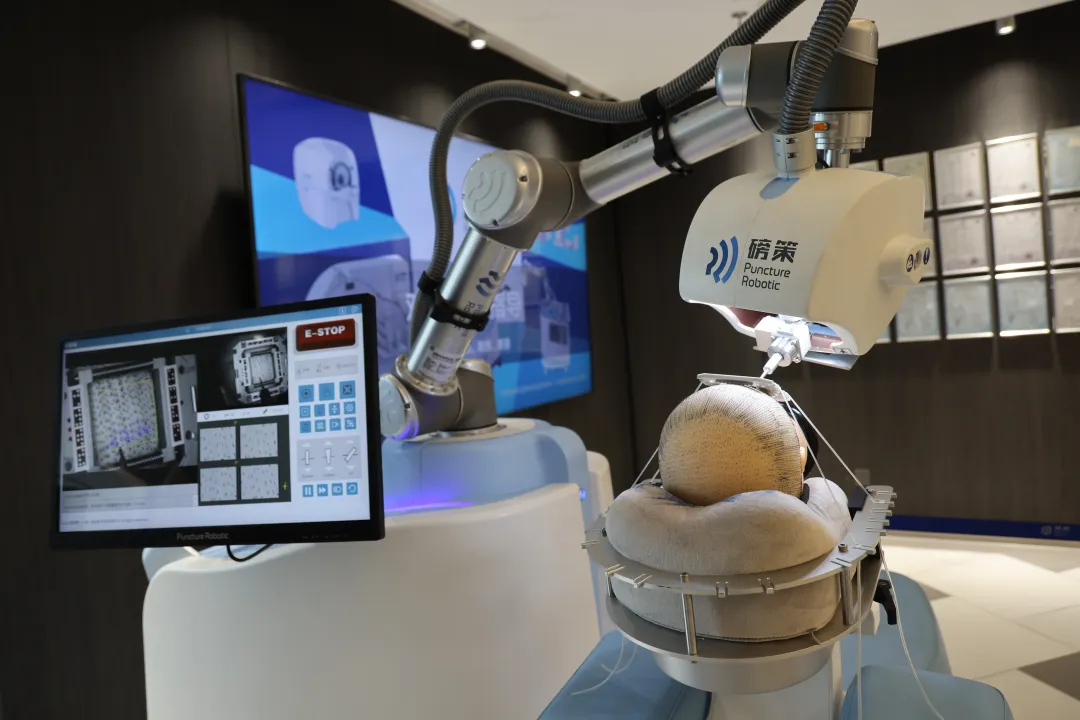
At the same time, the unique value of hair transplantation lies not only in its significant efficacy but also in its high dependence on aesthetics . For many consumers, hair transplantation is not only a medical procedure but also a means of appearance management. However, the development of this field is also accompanied by the dual challenges of consumer awareness and technological capabilities. Zhang Zhaodong pointed out: "Many people have misunderstandings about hair transplantation, such as believing that simple medication or health products can solve hair loss problems. In fact, hair transplant surgery requires extremely high precision and rich operational experience, and the lack of technology is often a bottleneck in industry development." Faced with huge market demand, the hair transplant industry is entering a critical period of technological innovation. Through technological upgrades and process optimization , hair transplant robots are attempting to break through the limitations of traditional manual operations, opening up new development paths for the industry while meeting consumers' dual expectations for aesthetics and efficacy.
# Hair Transplant Robot: A Breakthrough from Precision to Standardization in the Industry
With the continuous growth in demand for hair transplant surgery, the limitations of traditional manual operations are becoming increasingly apparent. From the precision of follicle extraction to surgical efficiency, from differences in doctors' technical levels to the quality of patients' postoperative recovery, these factors have placed higher demands on the industry. Against this backdrop, hair transplant robots have emerged as a core force driving industry transformation.
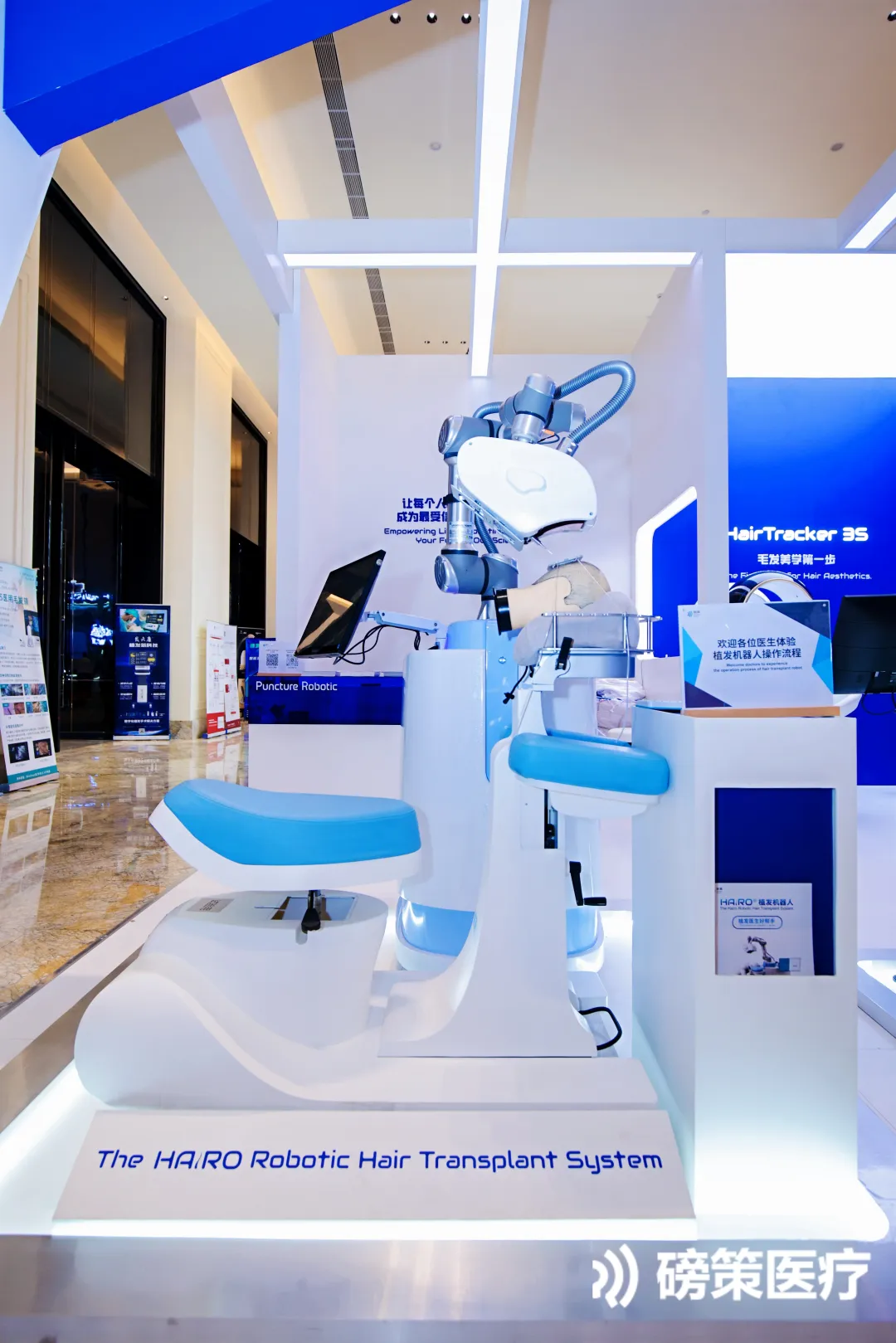
▲ HAIRO Hair Transplant Robot
■ Improve Precision and Efficiency
Traditional hair transplant surgery relies on the experience and skill of the surgeon, which often results in high rates of follicle transection and low efficiency. Puncture Robotic's HAIRO hair transplant robot has achieved a significant breakthrough in this area. “In traditional manual follicle extraction, the transection rate is usually as high as 15%, while our robot has reduced this proportion to less than 10%, and the follicle integrity has increased by more than 40%.” Zhang Zhaodong, CEO of Puncture Robotic, shared.
In addition, the robot can extract 1800 hair follicles per hour, which is far higher than the 800 of similar foreign products . "Although we have not yet completely surpassed experienced doctors (about 2000 per hour), technological iteration is gradually narrowing this gap."
■ Achieve Minimal Trauma and Fast Recovery: Asian Adaptation
Unlike foreign products that use 1.5mm diameter needles, Puncture Robotic's hair transplant robot uses 0.8-1.0 mm needles design, which is more suitable for the hair growth characteristics of Asians. This improvement not only reduces trauma during follicle extraction, but also makes the extraction site almost invisible , significantly improving the patient's postoperative experience.
■ Standardization and Data Empowerment
In traditional manual hair transplantation, the quality of each surgery largely depends on the surgeon's experience and judgment. Puncture Robotic's hair transplant robot uses full data management , providing precise records of the extraction path, depth, and distribution of each follicle. The quality report generated by the robot can quantify the entire surgical process and help doctors conduct postoperative evaluations. This standardization is difficult to achieve with manual operation.
■ Lowering the Barrier to Entry for Doctors and Extending Professional Lifespan
Hair transplant robots not only improve surgical efficiency but also provide important support for doctors. Traditional hair transplant surgery requires doctors to operate in a bent-over position for extended periods, greatly increasing the burden on the cervical spine and eyesight. Robots can share the high-intensity repetitive work, allowing doctors to focus more on planning and aesthetic design. The introduction of this technology not only lowers the barrier to entry for doctors but also significantly extends their professional lifespan.
■ Redefining Patient Experience
For patients, the advent of hair transplant robots means not only higher surgical quality but also improved comfort and safety. Higher precision, less trauma, and faster recovery speed , have brought hair transplant surgery to a new level in terms of both technical content and user experience.
By comprehensively breaking through precision, efficiency, adaptability, and standardization, the hair transplant robot has set a new benchmark for the industry. Zhang Zhaodong summarized: "Our goal is to transform hair transplant surgery from experience-dependent personalized operations into replicable and standardizable technical services. This not only meets consumers' expectations for high-quality services but also provides new possibilities for the upgrading of the entire industry."
# Business Model and Market Prospects: The Accelerated Ignition of Consumer Healthcare
The demand for hair transplant surgery has not only driven technological upgrades but also given rise to new business models. By accurately positioning market demand, the Puncture Robotic hair transplant robot has designed a flexible and efficient business model, bringing value to both public hospitals and private institutions.
■ Profit-making tool for private institutions
Private institutions are the main force in the hair transplant market, and the core of their services lies in High efficiency and high returns . Puncture Robotic CEO Zhang Zhaodong pointed out: "Private institutions generally have a high volume of surgeries, and robots can help them significantly improve efficiency and profitability."
Data shows that the average payback period for a hair transplant robot in private institutions is only 6 months. Calculated at an increase of 5 yuan in revenue per hair follicle, each surgery can increase profits by about 10,000 yuan . "This characteristic of rapid return on investment makes the robot a powerful tool for private institutions to enhance their competitiveness and creates greater profit margins for them."
■ Homogenization of capabilities in public hospitals
Due to limited doctor resources, the supply capacity of hair transplant services in public hospitals has always been constrained. The hair transplant robot, through the standardization of technology and simplification of operating procedures, allows ordinary doctors to achieve a level close to that of experts.
“A robot costing 3 million yuan, can pay for itself within a year in a public hospital , thanks to the fact that hair transplant surgery is a self-funded project and has a stable patient demand." With the help of the hair transplant robot, public hospitals can expand their service capacity, attract more patients, and further enhance their brand competitiveness.
■ Value creation from an investor's perspective
With the rapid rise of consumer healthcare, hair transplant robots are becoming a hot sector in the investment field. Compared with traditional surgical robots, they have stronger consumer attributes and a higher return on investment. "The attributes of consumer healthcare make hair transplant robots highly compatible with the needs of investment institutions," Zhang Zhaodong said, "especially in economic cycles, such high-tech products with rapid returns are very popular."
Investors not only value the profitability of hair transplant robots in the market but also pay attention to their changes to the industry model . "While helping institutions improve service quality and efficiency, robots can also drive the development of the entire industry through technological innovation. This dual value is the core reason why the capital market favors hair transplant robots."
■ From brand empowerment to full-chain value
In addition to the economic benefits of the surgery itself, the hair transplant robot also brings added value in brand enhancement . By introducing robots, institutions can convey a technologically advanced image to consumers, attracting more high-end customer groups. Robots add not only revenue but also brand influence to hospitals and clinics.
The hair transplant robot has also promoted the realization of full-chain value. From the initial education and guidance of patients, to the data management during the surgical process, and to the evaluation of postoperative recovery effects, the robot has transformed hair transplant services into a complete set of traceable and optimizable closed-loop systems. This upgrade in service experience further enhances patient satisfaction and trust.
# Benchmarking against the international market: The comprehensive surpassing of domestic technology
In the global hair transplant robot market, foreign products have long held a dominant position. However, in recent years, with technological iterations and changes in market demand, the Puncture Robotic hair transplant robot has rapidly risen through differentiated innovation, surpassing its international competitors in several key dimensions.
■ Limitations of international products and market gaps
Although foreign hair transplant robots had a leading edge in the early stages of technological development, they have gradually shown a lack of innovation in recent years. Zhang Zhaodong frankly stated: "Some foreign hair transplant robots still maintain the technological level of more than ten years ago, with low efficiency and high trauma, and are no longer able to meet the needs of the current market, especially the Asian market."
Taking the needle diameter as an example, foreign robots generally use 1.5 mm needles , which may be acceptable for European and American patients, but for Asians, the trauma is obvious, and the postoperative recovery time is longer, affecting the patient experience. In addition, the extraction efficiency of foreign products is usually around 800 hair follicles per hour, which is far below market demand 。
■ Differentiated advantages of domestic technology
The Puncture Robotic hair transplant robot takes the needs of the Asian market as its core, focusing on optimizing precision, efficiency, and adaptability . In the hair follicle extraction stage, the robot uses a needle design with a diameter of 0.8-1.0 mm , , not only reducing trauma but also achieving faster postoperative recovery . This design directly addresses the core concerns of Asian patients, improves the patient experience, and also makes hair transplant technology more attractive to the market.
In terms of efficiency, the Puncture Robotic robot can extract 1800 hair follicles per hour , more than twice the efficiency of foreign products. "Although it has not yet completely surpassed experienced doctors, our technology iteration speed is fast, and closing this gap is imminent."
■ A more locally-adapted business model
When foreign hair transplant robots enter the Chinese market, they are often criticized for their high prices and high consumable costs. Puncture Robotic robots, through local R&D, not only reduce equipment costs but also optimize consumable costs , making the robot adaptable to a wider range of medical institutions. "Our goal is to make the robot cost-effective in both cost and function, so as to cover more market demand," Zhang Zhaodong said.
■ Promoting the upgrading of industry standards
The Puncture Robotic robot has not only achieved technological breakthroughs but also played a significant role in promoting industry standardization. Through data-driven and standardized surgical process design, the robot transforms hair transplantation surgery from personalized operations relying on physician experience into quantifiable and traceable standardized services.
Zhang Zhaodong summarized: "Foreign products rely on early technological accumulation but lack continuous innovation, while our goal is to stand on the shoulders of giants, continuously optimize products, and drive the development of the entire industry through technological innovation."
# Conclusion
The advent of the Puncture Robotic hair transplantation robot not only marks another major breakthrough for domestically produced medical devices but also a milestone in the high-quality development of the hair transplantation industry. As the first company to obtain a registration certificate for a hair transplantation robot, Puncture Robotic has not only filled a technological gap but also set a new benchmark for the industry. From precise follicle extraction to data management, from physician support to patient experience, this product is driving profound changes in the industry with its comprehensive technological advantages.
In the future, the hair transplantation robot market will show unlimited possibilities driven by technological innovation, and Puncture Robotic will also occupy an important position in the industry ecosystem and global competition. With continuous technological upgrades, Puncture Robotic will not only continue to lead the domestic market but also is expected to expand globally, promoting the comprehensive upgrading of consumer medical care. This innovative product not only represents the technological strength of domestically produced medical devices but also brings new hope to doctors, patients, and industry partners.
Zhang Zhaodong mentioned in an interview: "Our vision is to make the hair transplantation robot not only a tool but also a catalyst for industry transformation, driving the global market towards more efficient, precise, and humane development." The Puncture Robotic hair transplantation robot is shaping the future of medical care with practical actions, opening a new chapter in the hair transplantation industry. MedRobot will continue to pay attention.